Holland is a country with a rich historical and traditional heritage. The Dutch themselves are very traditional people. Holland would not be Holland without the famous tulips, windmills, cheese and wooden shoes. When visiting Holland, it’s absolutely a must to experience and taste these traditions.
Here are some interesting facts about typical Dutch things:
The famous black and white cows are Holstein cows, also known as Holstein-Friesian or Friesian. They are dairy cows, and it is said they have been bred for their dairy qualities for around 2,000 years. It seems that the Dutch breeders developed the breed with the idea of obtaining animals which would make best use of grass which is an abundant abundant resource in these areas. Over the centuries this resulted in efficient and renowned high-producing black-and-white dairy cow!
A typical Dutch snack is the herring together with raw onions. The herring is cleaned and the head is removed after which it is conserved in a traditional way with salt. The Dutch way of eating the herring is by picking it up from its tail and gradually letting it slide into the mouth. Another popular way of eating it on a sandwich, in Dutch called ‘broodje haring’.
In the Netherlands everybody skates! Ice skating dates back over a millennium where the natives use to travel on frozen rivers and canals by adding bones to their shoes in order to be able to skate. Centuries later people stated skating for fun and in the Netherlands the Dutch began touring the rivers connecting the 11 cities of Friesland which eventually led to the ‘Eleven Towns Race’, commonly known as Elfstedentocht.
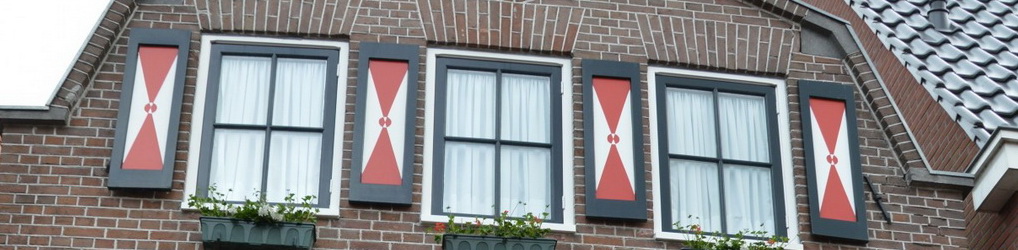
The Dutch architectural style is very distinctive, featuring step-gables like designs widely found in the old townhouses of Amsterdam.
Windmills
Worldwide, windmills are often closely associated with the Netherlands. This relation ZaanseSchans Mill can be traced back to the 17th century during which The Netherlands was going through an economical and cultural boom. During this era, windmills were vital for converting lakes and polder ditches into fertile land. For centuries windmills were the primary source of power in Holland.
In fact, about a century ago there were approximately 10,000 functional windmills and today there are still more than 1,000 mills, the majority of them located in Zuid Holland. Kinderdijk is the most famous place for windmills in Holland. The windmills are very well preserved and fully operational. In 1997 the Kinderdijk mills were placed on the World Heritage List of UNESCO. On Saturdays, during July and August all the windmills are set in motion.
Wooden clogs
Wooden clogs are considered by many as a form of Dutch traditional dress. This frenzy mania boomed during the last few decades within the tourist industry. Of the 3 million wooden Dutch clog shoes which are made yearly, a big part of them are destined for tourist seats. Many think that all Dutch people wear clogs, which is why Dutch are sometimes called ‘cloggies’. In Dutch, clogs are known as klompen.
In fact, in Holland few people wear clogs, mostly farmers, market-gardeners and people who work in nurseries. This is because clogs are regarded as a kind of safety shoes and indeed they are. Dutch clogs have been officially marked as safety shoes, after being tested and awarded the CE mark. Wooden shoes have been worn through out Europe since the late dark ages. Dutch used to wear them, mainly because of the swampy ground and the abundance of good wood ‘klompen’ are made of such as willow and poplar.
The KlompenMuseum Gebroeders Wietzes in Eelde has a vast collection of ‘klompen’ being the greatest wooden shoe museum to this date. www.klompenmuseum.nl
Tulips
The tulip was introduced to Europe by the Ottoman Empire in the 16th century. The tulips passion for tulips grew stronger with in upper class members from the Low Countries, competing among each other for the rarest collection of tulips. Eventually everyone began to deal in bulbs, essentially speculating on the tulip market, which was believed to have no limits. During spring large areas of Holland are transformed into splendid tulip carpets. This awfully beautiful transformation, gives the Dutch a good cheer from the frosts of autumn and the snow of winter.
Be sure to tour the Lisse Bollenstreek Route (Bulb District Route), more popularly known as the Bloemen Route (Flower Route).The route is about 15 miles long and it’s best experienced while cycling.
Also worth seeing is the Flower parade, a huge procession of nicely decorated floats and luxury cars. The last but not the least, the Keukenhof gardens, an incredible botanic experience. The best time to visit these places is mid-April, possible a bit earlier or later, depending on the weather.
Bicycles
Holland is very famous for the 20 million bicycles zigzagging around the country. With an astonishing 4 million difference between bicycles and people, Holland has the highest bicycle density in the world. No wonder why there is a steady rate of 800 thousand bicycles in Holland stolen per year. So lock it or lose it!
What makes the Netherlands such a devoted bicycle country is not precisely known, but a close guess would be that Holland is a very flat country.For the Dutch, a bicycle is the primary means of transportation within the city. In fact a lot of people own several bikes for different purposes; one for everyday use which is usually not more than a wreck and a decent one for trips and tours.
With a length of 11,000 miles of paths and bicycle lanes, Holland is the perfect country for a cycling vacation. If you are planning such a vacation we suggest you to visit this link: Cycling in the Netherlands
If you are a ‘fiets’ (bicycle in Dutch) lover, don’t miss the opportunity to visit the National Bicycle Museum in Velorama. An extensive collection of 250 authentic veteran cycles will impress bicycle lovers of all ages.
Cheese
Cheese has been exported from The Netherlands since the middle ages and to date The Netherlands is the world’s largest cheese exporter. No wonder why two of the Alkmaar – traditional cheese market most famous cheeses are named after their town of origin Edam and Gouda.
Edam is well known for its round shape whilst Gouda is the most commonly produced cheese. The cheese culture in Holland is not something recent; in fact archaeological research shows that inhabitants of the Low Countries have been producing cheese since prehistoric times.
The first cheese markets and weigh houses were introduced in the middle Ages so as to control both the quality and quantity of cheese being sold.
The traditional merchant cheese markets in Alkmaar, Gouda and Edam are fully functional to this date. During summer months these three villages follow traditional rituals of the cheese trading process. Cheese markets are one of the country’s most popular tourist attractions. Alkmaar is just over half an hour from Amsterdam Central Station by intercity train.
Drop
Drop is the Dutch national sweet with a consumption rate of 4 kilos per person per year. This controversial typical black sweet is a combination of sugar, sal ammoniac, gum arabic and liquorice root extract. Unfortunately enough, the inventor of the drop is yet unknown.
In the past drop was a medicine in a form of syrup or pills to combat cold. There are many tastes and types of drop; sweet, salty or double salty, honey flavored and the list goes on but never enough!
Stroopwafels
A ‘stroopwafel’ (syrup waffle, caramel Cookie Waffle or treacle waffle) is a waffle made from two thin layers of baked batter with caramel syrup filling in the middle. The syrup waffle originates from Gouda in the Netherlands. It is said that Gerard Kamphuisen who opened his bakery in 1810, was the inventor of the handcrafted Gouda Stroopwafel.
Until 1870 Gouda was the only city where syrup waffles were made. As described in one of the oldest found recipes of 1840, left overs and crumbs were used to bake cookies sweetened with syrup. Syrup waffles were also called “poor mens cookies” because they were very cheap to produce.